Before paying for the drum scan
The missing middle in my film photography workflow
Proof scans were enough to find possibilities, but not always enough to explore them. My October 2025 notes describe the gap between a promising negative and a finished print.


In October 2025 I was trying to decide which negatives deserved drum scans while also working out how to judge them properly before paying for those scans. I had low-resolution proofs from 35mm and 120 film, some existing drum scans, and two 4×5 negatives at Icon for scanning. The awkward part was the space between recognizing an interesting frame and knowing what I wanted to make of it.
A proof can raise a question it can't settle
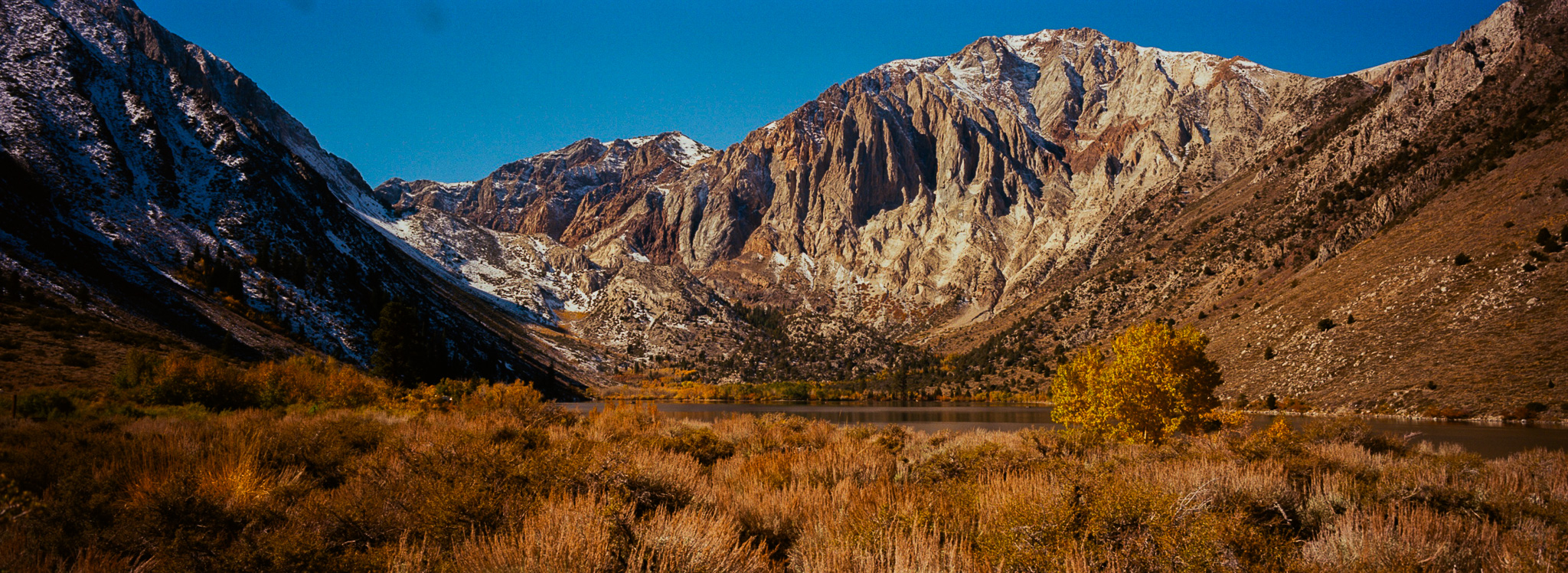
In the workflow conversation, I described a typical XPan roll as yielding anywhere from no keepers to a few, with fewer still feeling like portfolio candidates. The batch under discussion had three or four pictures I wanted to experiment with. I wasn't looking for a process that treated every exposure as a finished print waiting to happen.
The proofs helped me find those possibilities. Then came the questions that needed more room: how the tonality might work, whether a different crop helped, and whether the picture held together on paper. Jumping directly from that first selection to the most expensive scan made the exploratory stage unnecessarily consequential. Rejecting everything that didn't immediately convince me in a proof seemed equally unhelpful.
Put an experiment between selection and commitment
The proposed workflow added an intermediate step. Review the proofs and shortlist the frames worth investigating. Make a working scan, experiment with the image, and produce a small test print. Only then decide which negatives justify a final scan for larger printing. The document proposed home scanning as one way to make that middle stage available.
It was still a proposal. I was researching scanners and printers, waiting to assess the Icon scans, and comparing ways of getting the work done. There is no completed equipment comparison or demonstrated cost saving in those notes. The useful idea is the sequence of decisions: spend enough effort to learn what the picture needs before committing to the final production step.
A file-size target isn't an answer about a print
The two 4×5 scans were described in the notes as 500 MB files, with a question about whether I needed larger files. Looking back, that question needs a physical destination. File size by itself doesn't tell me whether the result will satisfy me at the print size I want. It also doesn't tell me whether I have chosen the right photograph.
The plan was to inspect the returned scans and print them before settling the scanning approach. That gives the next decision something concrete to rest on. I can look at the result, decide what is lacking, and work out whether the limitation belongs to the scan, the treatment of the image, or the photograph itself. Ordering a bigger file before doing that risks paying for an answer to the wrong question.
Control belongs at the point where I make the picture
Another question in that conversation was how much of the process I needed to own. Home scanning promised freedom to experiment, but also meant equipment, setup, dust, and time. Sending work to a specialist could remove some of that burden. Neither choice automatically gave me a stronger photograph. I needed to decide which arrangement let me examine and revise the image properly.
The distinction I still find useful is between a scan for finding out and a scan for finishing. The first needs to let me try things. The second needs to serve a picture I have chosen and a print I intend to make. My notes don't resolve every practical question, but they do identify where I was stuck. I needed a workable experiment between the proof and the final scan.
Share this entry