Why I want a photograph I can finish myself
The move toward large format and ownership of the image
From choosing a subject to deciding on a print, I want a continuous relationship with an image. Large format is making the practical gaps in that ambition very clear.

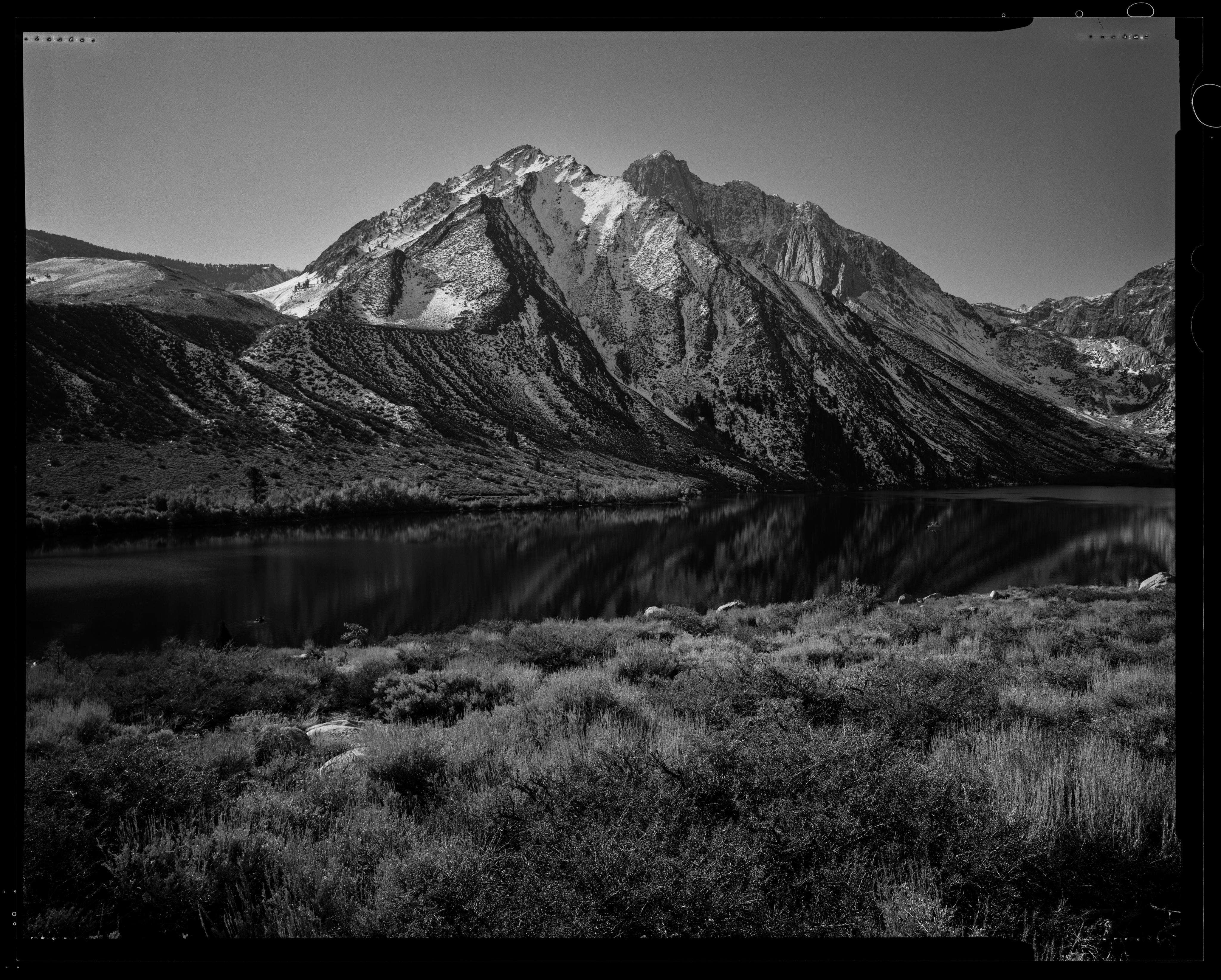
My interest in large-format photography comes partly from wanting ownership of an image all the way through. I mean the ability to choose what to photograph, decide when it is worth returning, work on the result, and determine what the finished photograph should be. Cinematography has given me a profession inside a collaborative process. Photography gives me a place to carry those decisions myself, including the ones that happen long after the camera goes away.
Choosing a subject without waiting for a production
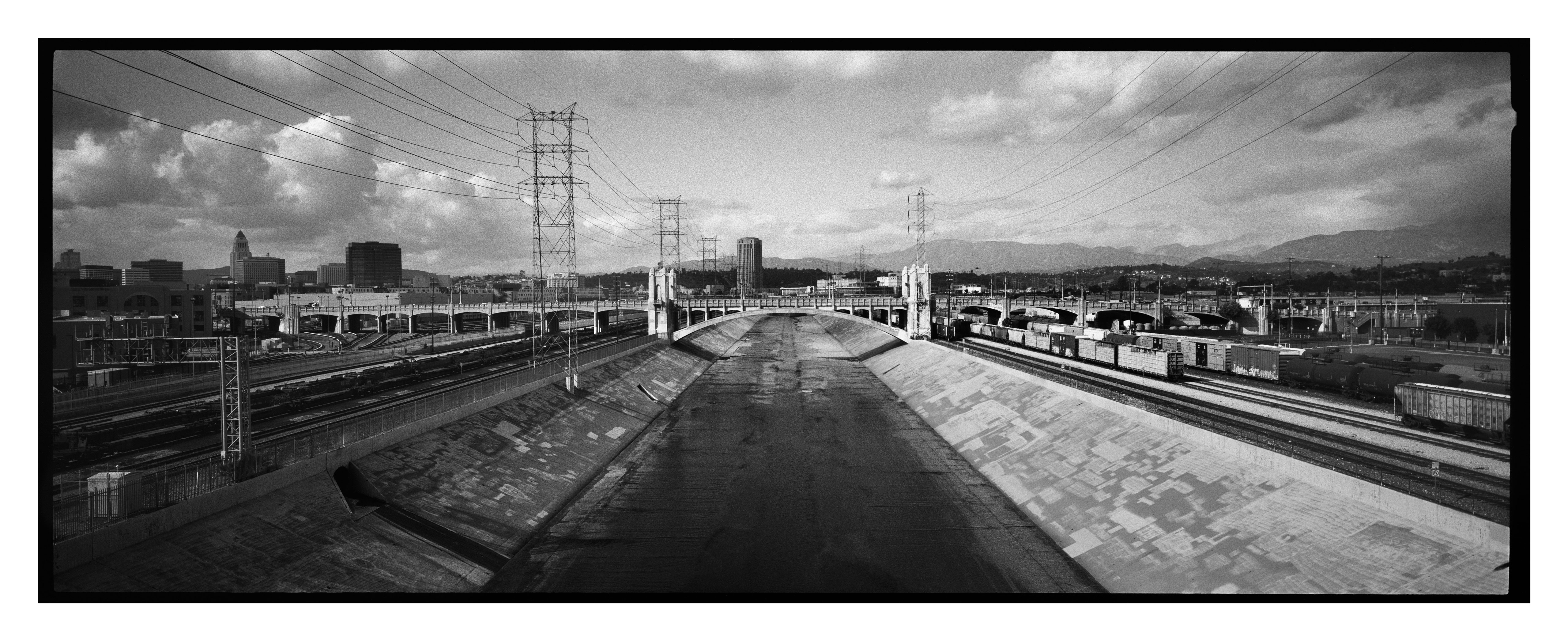
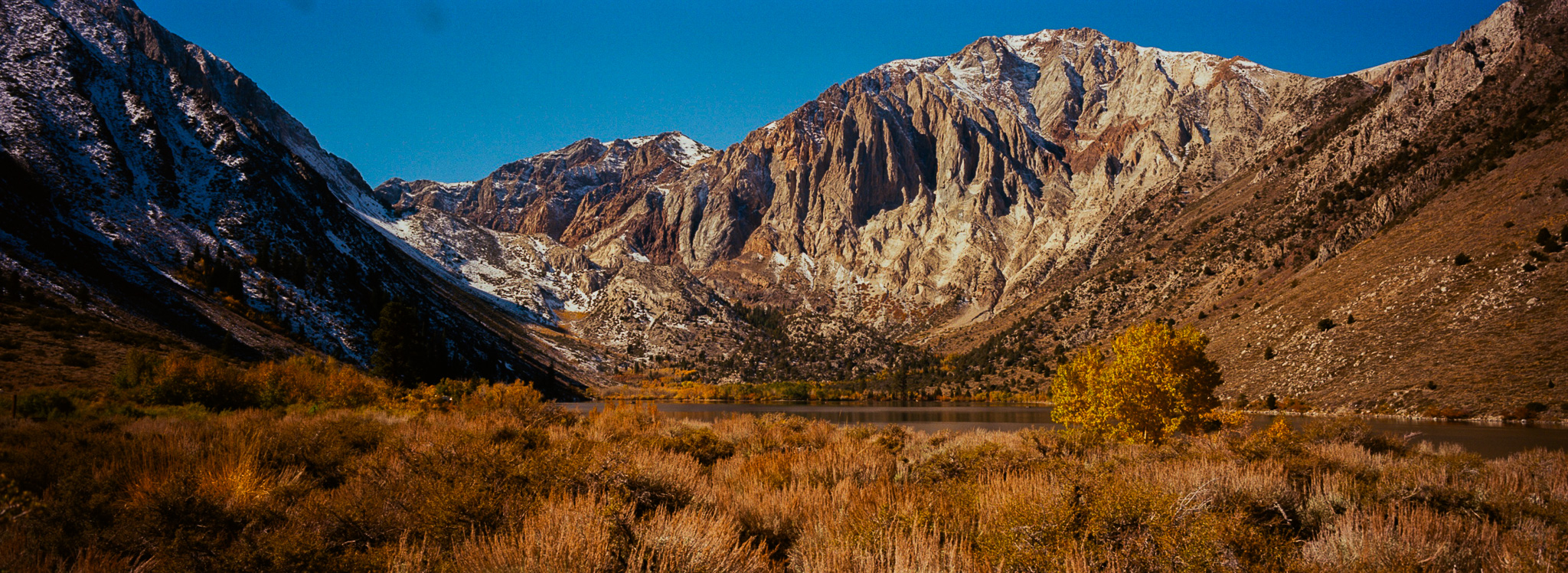
The photographs in American include river channels, motel facades, roadside buildings, parked vehicles, and open ground. The Landscapes selection begins with the Eastern Sierra. These are subjects I can keep looking at without needing a film to provide the occasion. The decision to go back can come from the photograph itself: a place still interests me, or I haven't yet made the picture I wanted there.
That is a useful freedom after working with scripts, schedules, and other people's projects. It also removes an excuse. I have to choose what deserves my attention and decide what to do with the results. An archive full of exposures is evidence that I went out with a camera. It doesn't settle which photographs I want to stand behind.
The 4×5 made preparation visible again
My first 4×5 field trip to Mammoth in autumn 2025 made that responsibility fairly concrete. I had two holders, four sheets of film, and no loupe for checking focus on the ground glass. Afterward I wrote that I hoped the pictures were sharp. I also needed a better arrangement for separating exposed and unexposed film.
There is a direct connection to having started in camera prep. Wanting control over an image means accepting the ordinary work that makes control possible. More holders, a focus check I trust, and clear film handling are part of the photograph. I loved using the camera, but the notes from that trip give me specific things to fix before the next one.
A scan leaves another set of decisions open
My October 2025 workflow notes describe a gap between the lab proof and an expensive finishing scan. I had existing drum scans, two 4×5 negatives awaiting scans at Icon, and questions about how to experiment before committing to a final result. The proposed sequence was a usable working scan, adjustments and test prints, then a better scan for a photograph I had actually chosen.
That process is still an ambition in those notes, rather than a completed printing system. It matters because ownership doesn't require me to perform every technical task personally. A lab can develop the film; a specialist can scan it. I want enough access to the image between those stages to make decisions about it, and enough continuity that the finished version reflects those decisions.
The galleries are a working selection
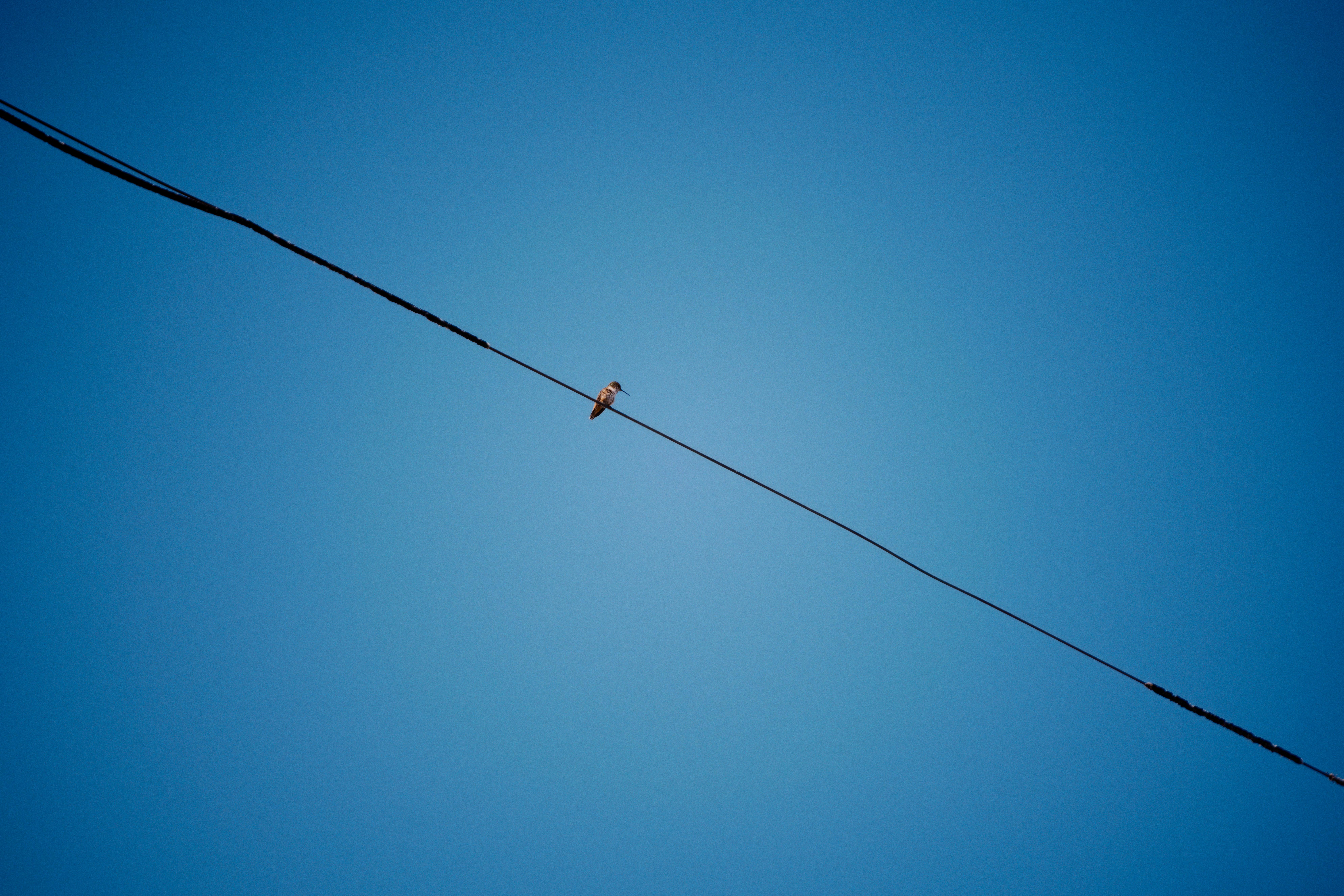
I have organized the photography into American, Landscapes, Urban Landscapes, Nature, and Field Notes. American holds a broader series; the subject collections offer other ways into the pictures. Field Notes keeps room for observations that don't need to carry the weight of a finished series. Some photographs belong in more than one of those views.
The galleries include photographs made across different formats and stages of the process. They aren't a claim that every picture is a finished large-format print. They are a selection I can put in front of someone now, while I work toward a more complete practice. The next meaningful step is a photograph I have examined, revised, and finished well enough to put on a wall.
Share this entry