Writing a conversation without a transcript
Research notes for The Boyishness of Killing Things
A film in development about Muir and Roosevelt needs room for invention—and a precise account of where that invention begins.

I'm developing a film called The Boyishness of Killing Things, built around John Muir and Theodore Roosevelt's 1903 camping trip in Yosemite. The attraction is a small dramatic space: people outdoors, talking, observing, disagreeing, and living alongside one another. The research problem is equally specific. There are letters and recollections, but the sources assembled for the project do not give me a transcript of the campfire conversations.
Three marks in the research margin
The working outline separates material into three categories: documented, attested but secondhand, and invented. That distinction has become one of the most useful writing tools on the project. It stops a scene from acquiring false authority simply because I have read it repeatedly in my own draft.
Roosevelt's March 14 invitation survives. In it, he asks to “drop politics absolutely for four days.” I can point to the letter. The way a character pauses before answering another character is a different kind of choice. So is the wording of a private exchange that no source transcribes. Both can belong in the film, but I need to know which one I'm handling.
The dates change the story
One correction does a great deal of dramatic work: Yosemite National Park already existed when the men met. It was established in 1890. Yosemite Valley and the Mariposa Grove were still under separate state administration and became part of the national park in 1906. A version in which the camping trip simply creates Yosemite would give the film an easy ending at the cost of getting its central problem wrong.
The more interesting question is what agreement these particular men could reach, and what each understood that agreement to mean. My working interpretation is a negotiation rather than a sudden conversion. That is a dramatic reading of the material, not a claim that a surviving document tells us every private intention. It gives the characters something to do beyond announcing beliefs the audience already associates with them.
Let the place organize the scenes
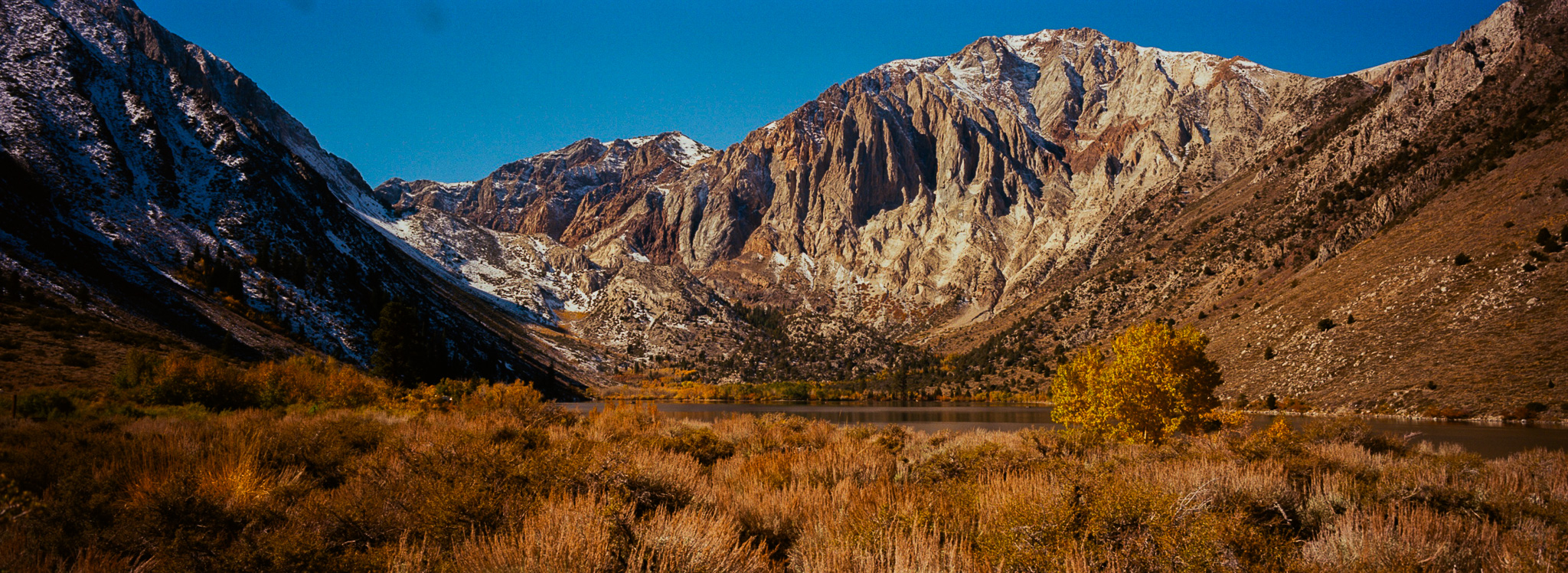
The three camps offer a physical structure: the Mariposa Grove, snow near Sentinel Dome, then the Valley floor near Bridalveil Fall. That movement is in the historical account. The screenplay's work is to decide how conversation and behavior change across those environments. A debate delivered in three interchangeable scenic locations would waste what the journey gives us.
For each scene, I want to ask what the people are occupied with while they talk, who can hear them, and what they have to attend to besides the argument. Those are staging questions. They can keep the film from becoming a sequence of illustrated quotations. They also make the line between evidence and invention visible to me: the record may establish the place while leaving almost every gesture for the writer to decide.
A research gap isn't something to disguise
The project has a rule that the screenplay's invented dialogue must remain faithful to documented positions, vocabulary, and outcomes. That doesn't mean stitching historical phrases together until a scene sounds official. It means keeping a record of the choices, checking what supports them, and allowing the research to overturn something that initially seemed dramatically convenient.
This film is still in development. I don't want to present the research as a finished answer, or the screenplay as recovered history. What interests me is the work of making a believable scene inside an incomplete record. A letter can give me a person's stated wish. It can't give me the whole person. The film has to make its choices in that space and remain answerable for them.
Share this entry